Synergistic feeding strategies: Unlocking performance potential across species
Modern livestock production is driven by the ambition to unlock the full genetic potential of animals. Whether in poultry, swine or ruminants, high-performing animals demand more than adequate supply of energy and protein. In addition to optimal management and husbandry conditions, the feed must be safe, balanced and supportive of gut health and systemic resilience. Yet, in practice performance is undermined by several hidden constraints including mycotoxin contamination, unbalanced fiber fractions, pathogenic challenges, stress events and persistent
inflammation.
Addressing these challenges in isolation has brought progress, but suboptimal performance continues to be a recurring problem. An overall approach thus includes integrating solutions against multiple constraints to provide a more powerful strategy.
High performance requires high-quality feed
Animals with high genetic potentials can only reach the expected levels of growth, egg or milk production, reproduction or feed efficiency when their diet quality is adequate. Problems such as feed contamination, imbalanced fiber composition or antinutritional factors promoting systemic inflammation result in financial losses. Creating the prerequisites for health is therefore inseparable from achieving the full performance potential.
Mycotoxins: A universal challenge
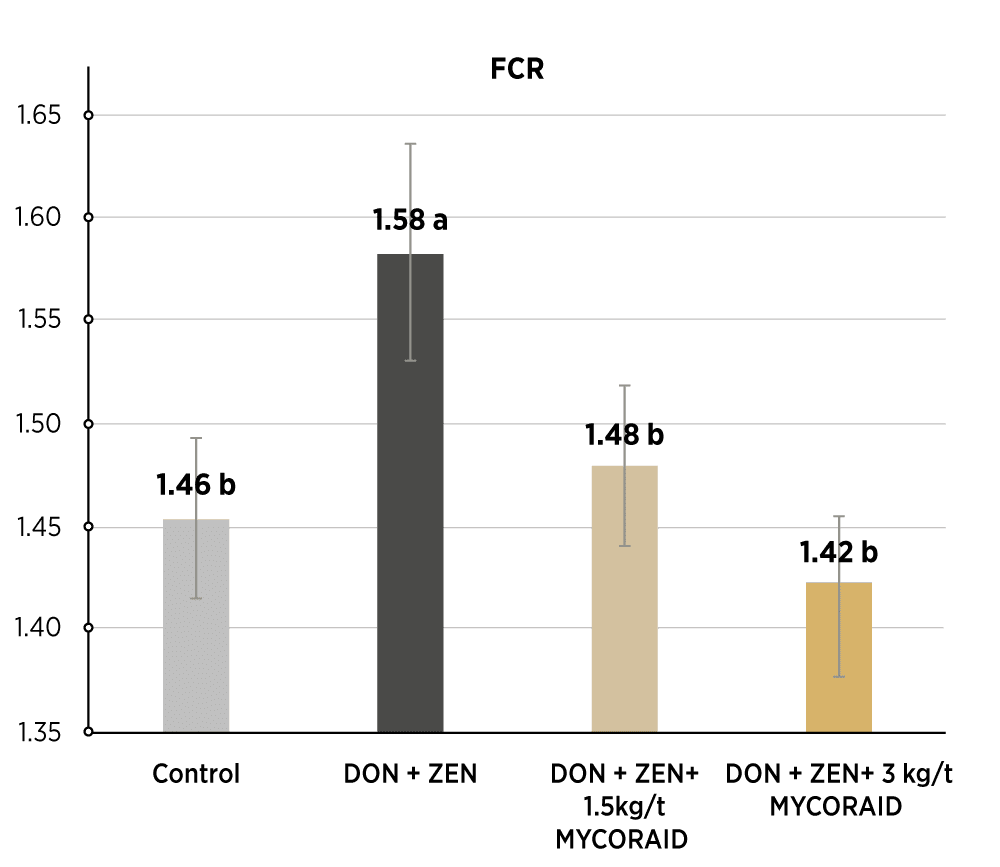
Mycotoxins remain among the most consistent threats to feed quality. Surveys consistently report contamination in cereals and by-products, affecting all species alike. Toxins damage intestinal integrity, impair immunity and burden target organs such as the liver and kidneys. In poultry, mycotoxins (e.g. aflatoxins, deoxynivalenol, fumonisins) impair growth performance and can damage vital organs, leading to poor productivity. These toxins also have immunosuppressive effects in birds, weakening the immune system and increasing susceptibility to infections. In pigs, mycotoxin exposure often suppresses immunity – pigs become more vulnerable to infectious diseases and show reduced vaccine efficacy as a result. Even subclinical levels of mycotoxins in swine feed cause performance losses (e.g. reduced feed intake and weight gain), translating to slower growth and economic losses without obvious illness. In ruminants, the rumen can detoxify some mycotoxins, but high toxin doses still provoke feed refusal, immunosuppression, and lowered milk production, ultimately compromising cattle health and performance. (Figure 1: A multi-component feed supplement (MYCORAID) mitigated the increase in FCR of weaned piglets during mycotoxin contamination (Raj et al., 2025)).
Building a resilient gut: the role of eubiotic fibers and phytogenic feed additives
Dietary fiber is pivotal for a balanced and physiological gut microbiome across species. In ruminants, fiber balance is critical to prevent rumen acidosis and sustain milk yield and quality. In pigs and poultry, fermentable fibers stimulate the hindgut production of SCFAs such as butyrate, acetate and propionate while inert fiber regulates intestinal motility. Diet formulators usually count on conventional sources of dietary fiber such as grain hulls, brans or pulp. As these components show variable fiber composition and quality, the addition of a functional fiber helps to create a reliable fiber concept. In this context, eubiotic lignocellulose such as OPTICELL balances the dietary fiber profile. Its eubiotic composition of lignocellulose from tree barks and trunks supports intestinal physiology on multiple levels and its functional fiber fraction is slowly and continuously fermented and enhances SCFA production throughout the hindgut (Figure 2 – Relative increases in SCFA production with eubiotic lignocellulose (OPTICELL) supplementation in several trials). The increased SCFA production, especially of butyric acid, ensures intestinal integrity, functionality and metabolic balance, prevents dysbiosis and secures performance.
Disruptions in the gut microbiome create an environment in which undesirable pathogens can take hold, often without causing clear clinical disease. In pigs, pathogenic bacteria such as Lawsonia intracellularis, Clostridium spp. and Brachyspira hyodysenteriae are frequently present at subclinical levels, compromising epithelial renewal, triggering local inflammation and reducing growth performance, uniformity and feed efficiency. Stabilizing the microbial environment is therefore essential. Standardized phytogenic blends can provide targeted support under these conditions, helping maintain microbial balance, preserve gut functionality and strengthen the epithelial barrier. As demonstrated in controlled studies, phytogenic supplementation of phytogenic substances improved growth and feed efficiency while lowering diarrhea incidence in pigs naturally infected with L. intracellularis, offering an effective nutritional strategy to mitigate pathogen pressure and sustain herd performance.
A recent field study (Wu et al., 2025) showed that a defined phytogenic feed supplement delivered efficacy comparable to tiamulin/lincomycin in pigs facing a L. intracellularis challenge (Figure 3 – L. intracellularis levels in rectal swab and fecal floor samples from pigs either treated with tiamulin/lincomycin (ABs) or a phytogenic feed supplement (DYSGUARD-S, 2 kg/t)). These findings align with Draskovic et al. (2018), where dietary supplementation with the phytogenic compound improved growth and feed efficiency and markedly reduced diarrhea incidence in pigs naturally infected with L. intracellularis (Table 1 – Performance and diarrhea of growing pigs infected with L. intracellularis fed with or without a phytogenic feed supplement).
Stress, inflammation and oxidative load
Regardless of species, feed itself often is a major trigger of stress and inflammation. Mycotoxins, oxidized fats, imbalanced protein/amino acids, variable fiber fractions compromise the intestinal barrier, activate the unspecific immune response and divert nutrients from growth, production and reproduction. In the case of subclinical, permanent inflammation these impacts result in silent losses of performance. Throughout the production cycles, financial losses can add up to substantial levels rather quickly.
Wood lignans provide a broad safeguard. With anti-inflammatory and anti-oxidative properties, lignans contribute to lowering the hidden inflammatory burden of the diet in order to maximize nutrient utilization. By safeguarding metabolic efficiency, wood lignans can prevent losses caused by stress and immune responses, and offer a suitable solution that works synergistically with other supplements to support not only optimal animal health but also optimal profitability.
Conclusion
Across livestock species, the performance potential is often compromised by dietary stressors. Addressing these factors in combination rather than isolation is key to maintain nutrient utilization and animal resilience. The areas outlined, mycotoxin control, balanced fiber composition, microbial balance and diet-induced inflammation management, illustrate how coordinated strategies can create the prerequisites for reaching genetic potentials consistently and profitably of production with several approaches combined.
By providing advanced solutions to address threats in animal production quickly and efficiently, and by managing external stress factors before they become challenges, A&P Nutrition helps animal farming businesses increase productivity while maintaining cost efficiency.
A&P Nutrition, the newly unified brand born from the strategic alliance of PATENT CO. and agromed under the RWA (Raiffeisen Ware Austria) umbrella, is redefining the future of animal nutrition. With decades of expertise now consolidated into a single, robust portfolio, A&P Nutrition is committed to delivering nature-inspired, scientifically validated solutions that address the most pressing challenges in animal health and performance. At the heart of this transformation lies a clear mission: Improving animal performance. This is more than a slogan—it’s a customer-centric promise backed by innovation, transparency, and a deep understanding of species-specific needs.